
Senior nutrition programs come with a unique set of daily pressures. Whether you manage a regional Meals on Wheels commissary, a senior living community kitchen, or a medically tailored meal program, your team has to hit strict food safety standards, stay on tight delivery schedules, and package meals so they are genuinely easy for older adults to open.
Walk into almost any senior nutrition commissary around 10, and you may see a race against the clock. Drivers are waiting by the loading dock, thermal bags are lined up, and the kitchen crew is trying to get hundreds of hot entrees and cold sides sealed without a single leak or crushed tray. Your packaging equipment is either saving your morning or holding everyone up.
Choosing between a manual tabletop sealer and an automated in-line system comes down to a simple balancing act. Buy too small, and your packing line turns into a daily bottleneck. Buy too big, and you burn through grant money or capital budget on floor space and machinery your crew doesn’t actually need.
Manual vs. Automated Packaging at a Glance
| Factor | Manual & Semi-Automatic Sealers | Automated In-Line Systems |
| Sweet-Spot Volume | 50 to 350 meals per day | 500 to 1,000+ meals per hour |
| Upfront Cost | Low initial investment; easy on tight budgets | Higher upfront cost; lower per-meal labor cost at scale |
| Crew & Volunteers | Hands-on; speed depends on who is running the machine | Minimal handling; frees your team for prep and staging |
| Seal Quality | Good, though pressure varies slightly from person to person | Exact heat, pressure, and dwell time on every tray |
| Kitchen Space | Fits right on a standard stainless prep table | Needs dedicated floor space, conveyors, and air/power lines |
| Maintenance | Simple mechanics; almost zero training required | Needs routine preventive care and trained operators |
Why Manual Tabletop Sealers Still Rule Smaller Kitchens
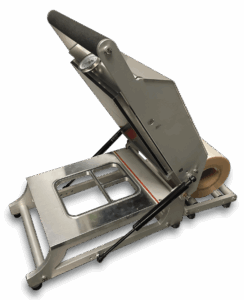
There is a reason tabletop heat-sealers remain the backbone of community-based senior feeding programs. They are tough, forgiving, and simple.
If your packing line relies on rotating volunteers or part-time staff, simplicity beats speed. You can teach someone how to safely run a manual tabletop unit in three minutes flat without having them stare at a complicated touchscreen. They also make sense when your menu changes every single day. If your crew is sealing soup bowls at 9 AM, three-compartment entrees at 10 AM, and cold fruit cups at 11 AM, swapping out a sealing die on a tabletop machine takes seconds.
Space is the other big factor. Senior meal programs sometimes operate out of church kitchens, community centers, or older facilities with zero extra square footage and no compressed air lines. A compact tabletop unit plugs into a standard wall outlet and gets the job done without forcing a kitchen remodel.
When Manual Sealing Starts Costing You Money
As central kitchens consolidate delivery routes and senior populations grow, there comes a tipping point where manual sealing stops saving money and starts slowing everything down.
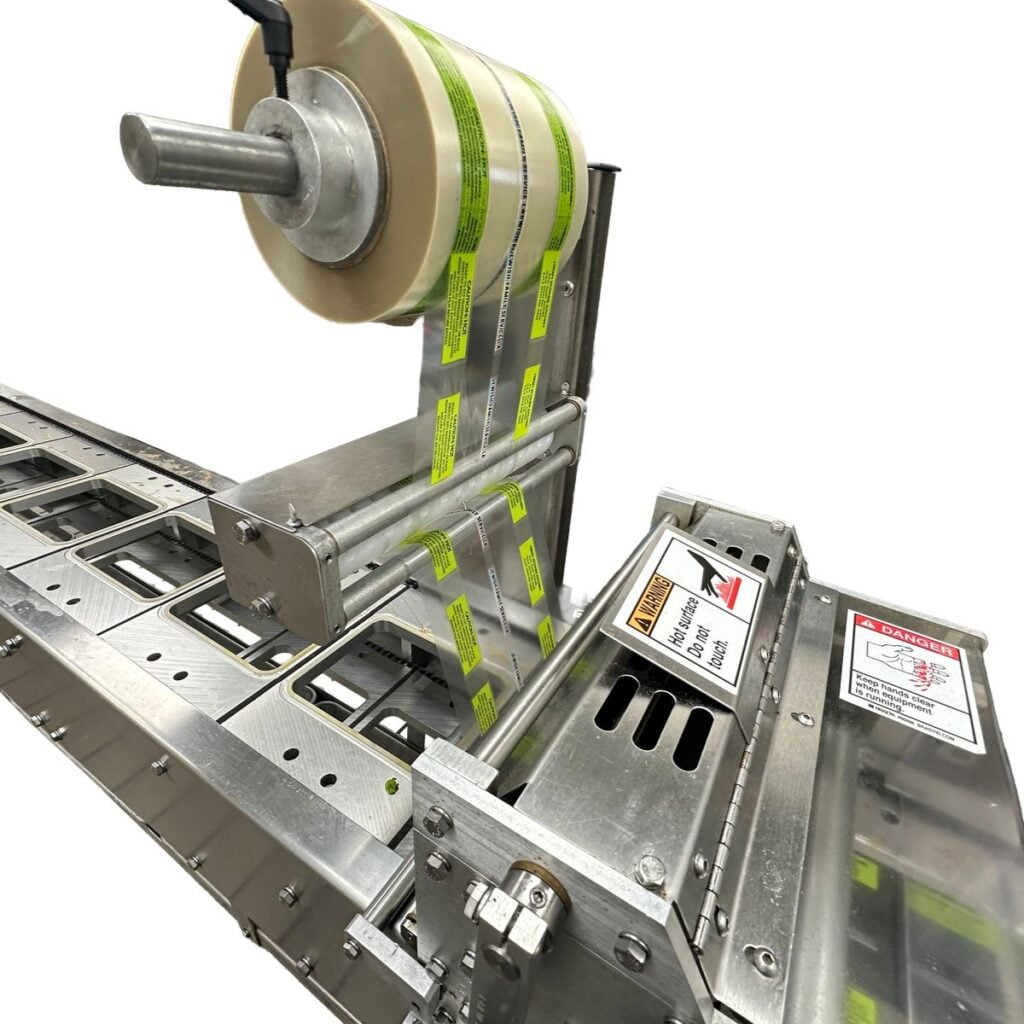
Total daily meal count only tells half the story. What really matters is your peak-hour crunch. If you have to seal 400 meals inside a tight 60-minute dispatch window before drivers hit the road, a manual sealer simply cannot keep pace. Automated in-line systems index, seal, and trim trays continuously, moving meals straight into hot boxes without a traffic jam at the end of the line.
Then there is the biggest complaint in senior nutrition: packaging that is impossible to open. Sealing a meal for an older adult requires a very specific sweet spot. The film has to hold tight enough to survive bumpy van deliveries without spilling gravy everywhere, yet peel back cleanly for someone with arthritis or limited grip strength. Automated machinery locks in the exact temperature and pressure on every single cycle, taking human guesswork out of the equation.
You also stop bleeding money on wasted supplies. Automated tray denesters and precision film registration put an end to crooked seals and crushed containers. If your kitchen struggles to hire or keep staff, automation lets a smaller crew hit higher daily meal targets without burning out by noon.
Three Things to Check Before You Buy
Before you sign off on any new equipment, take a hard look at three numbers in your kitchen.
- Your busiest 60 minutes
Don’t base your decision on your weekly average. Measure how many trays have to be sealed during your tightest rush right before delivery trucks pull out. - Your actual trays and films
Make sure any machine you look at runs smoothly with the containers you already use, whether that is ovenable CPET, pressed paperboard, or compostable fiber trays, paired with true easy-peel lidding film. - Your volume two years from now
If your meal contracts or home-delivered routes are projected to grow 20% to 30% over the next couple of years, stepping up to a semi-automatic rotary or compact in-line system now keeps you from outgrowing a manual unit too fast.
Let’s Test Your Trays on Our Equipment
You shouldn’t have to guess whether a sealer can keep up with your morning rush or whether your easy-peel film will release cleanly for your clients. The Platinum Packaging Group (PPG) works directly with senior nutrition programs to match the right machinery, trays, and lidding films to your exact kitchen footprint and budget.
Reach out to our team for a free throughput assessment, or send us your current menu specs and we will put together a sample tray-and-film test kit so you can see the seal quality firsthand.